
Finding the difference between moisture sensor and flood alarm is the first step toward saving your home from a $14,000 repair bill. Most homeowners assume these devices are identical, but using the wrong one could mean missing a hidden slow leak that rots your floorboards for months. While one acts as a sensitive scout for tiny damp spots, the other is your heavy-duty siren for a sudden burst pipe.
Investing in smart home security is about more than just gadgets; it is about proactive financial defense. According to the Insurance Information Institute, water damage and freezing claims are among the most frequent and costly disasters for homeowners. By understanding the difference between moisture sensor and flood alarm, you can strategically place the right tech in the right rooms to trigger insurance discounts and prevent mold growth.
What is a Moisture Sensor? The Silent Guardian of Hidden Drips
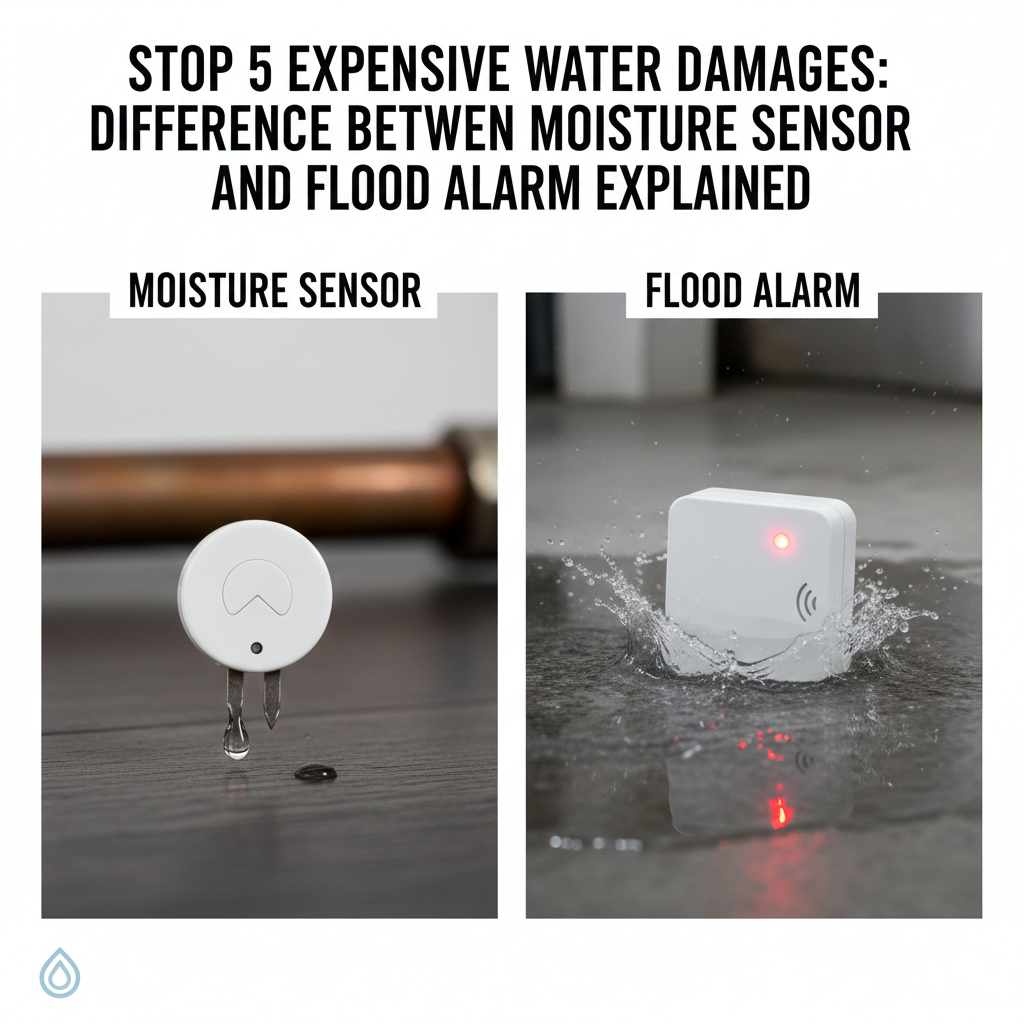
A moisture sensor, often referred to as a “spot leak detector,” is a highly sensitive device designed to identify the presence of water at an incredibly granular level. These devices typically use metal probes or conductive pins that sit flush against a surface. The moment even a thin film of water—sometimes as little as 1/16th of an inch—connects those pins, an electrical circuit is completed, and an alert is sent.
The true value of a moisture sensor lies in its ability to detect “seepage.” Think about the slow, rhythmic drip of a refrigerator water line or a tiny crack in a dishwasher hose. These leaks don’t cause a flood immediately; they create a damp environment that breeds black mold and ruins cabinetry over time. Because a moisture sensor is built for sensitivity, it is your best defense against the “invisible” damage that standard alarms might miss.
Why Sensitivity Matters for Early Detection
The difference between moisture sensor and flood alarm is most evident when you look at how they handle humidity. High-end moisture sensors, like those from GoveeLife, can often monitor ambient humidity levels in addition to standing water. This makes them perfect for basements or crawl spaces where excessive dampness is a precursor to structural rot.GoveeLife Water Leak Detector 1S$36.99Govee 4.4 (49) Opens in a new window
What is a Flood Alarm? The Heavy-Duty Siren for Disasters
While a moisture sensor is a precision tool, a flood alarm is your home’s emergency siren. These devices are generally designed to respond to “standing water” or a sudden influx of liquid. Imagine a washing machine hose completely snapping or a water heater tank catastrophically failing. In these scenarios, you don’t need to know it’s damp; you need to know there are two inches of water in your laundry room right now.
Flood alarms often feature much louder local sirens—sometimes reaching 100dB—to ensure you hear the warning even if you are asleep or at the other end of the house. In a smart home ecosystem, the difference between moisture sensor and flood alarm often comes down to the “action” they trigger. A flood alarm is more likely to be paired with a whole-home shut-off valve, like the Moen Flo, which can automatically turn off the main water supply the second a flood is detected.
The Role of Impactful Notifications
For a flood alarm, the speed of the notification is critical. Many models are built with a “sink-proof” or floating design. This ensures that even if the water level rises rapidly, the device stays above the surface to continue transmitting its signal to your Wi-Fi hub. This is a key difference between moisture sensor and flood alarm units, as smaller spot sensors can sometimes be submerged and short-circuited before they finish sending an alert.Moen Flo Smart Water Monitor & Shutoff$649.99Moen 4.2 (861) Opens in a new window
Strategic Placement: Where to Use Each Device
To maximize your home’s “sturdiness,” you must deploy these devices based on the specific risks of each room. Using a flood alarm under a bathroom sink is overkill, while using a tiny moisture sensor in a sump pump pit could be a recipe for disaster.
How to Stop Pipes From Freezing in Crawl Space
Best Locations for Moisture Sensors
- Under Kitchen and Bathroom Sinks: These are notorious for slow “P-trap” leaks that ruin vanity cabinets.
- Behind Toilets: A moisture sensor can catch a leaking wax ring before it rots the subfloor.
- Near High-Efficiency Furnaces: Condensate lines can clog and drip slowly, leading to basement mold.
Best Locations for Flood Alarms
- Water Heater Closets: When a tank goes, it goes fast. You need a loud alarm and an immediate notification.
- Laundry Rooms: Washing machine bursts are high-volume events.
- Basement Sump Pump Pits: You need to know if the pump has failed before the water reaches your finished basement flooring.
The difference between moisture sensor and flood alarm tech is that one is a “preventer” and the other is a “responder.” By layering them, you create a “leak-sturdy” environment that protects your wallet from both the $100 plumbing fix and the $10,000 restoration project.
FAQ: Understanding Water Protection Technology
1. Can a moisture sensor replace a flood alarm? Technically, a sensitive moisture sensor can detect a flood, but it may not have the loud siren or the floating design needed to survive a major water event. For high-risk areas like the main water line, a dedicated flood alarm or shut-off valve is safer.
2. Do these devices require a monthly subscription? Most “point-of-use” sensors from brands like Govee or TP-Link do not require a subscription. However, professional monitoring services through security companies like SimpliSafe may charge a fee for 24/7 dispatch services.
3. Will my home insurance give me a discount for both? Yes, many insurers like USAA and Amica offer premium discounts (often 3% to 10%) if you have a connected water leak detection system. The difference between moisture sensor and flood alarm usually doesn’t matter to insurers, as long as the system is Wi-Fi connected and provides real-time alerts.
4. How long do the batteries last in these sensors? Most modern sensors use CR2032 or AAA batteries that last between 1 and 2 years. High-end Z-Wave or Zigbee sensors can sometimes last up to 5 years because they use less energy to communicate with a hub.
5. Can a moisture sensor detect a leak through a wall? No, these sensors require physical contact with water. If you are worried about leaks inside a wall, you should look into a “whole-home water flow monitor” which tracks water usage patterns to find hidden pipe bursts.
Conclusion: Making the Right Choice for Your Home
Choosing between these two devices doesn’t have to be a headache. If you are worried about slow drips and mold in tight spaces, start with a moisture sensor. If you want to prevent a catastrophic basement flood or a burst washing machine hose, a flood alarm is your best bet. The most important thing is to understand the difference between moisture sensor and flood alarm so you aren’t left unprotected when the pipes eventually fail.
By combining the sensitivity of the GoveeLife 1S for spot monitoring and the power of the Moen Flo for whole-home shut-off, you can build a truly sturdy defense. Don’t wait for the puddle to appear—install your protection today and enjoy the peace of mind that comes with a leak-sturdy home.
About The Author
