
How to stop pipes from freezing in crawl space is a question that haunts every homeowner the moment the first frost hits the windowpane. While the rest of your house stays cozy and warm, the dark, damp cavern beneath your feet is often a playground for sub-zero temperatures that can turn your plumbing into a ticking time bomb. Understanding how to stop pipes from freezing in crawl space isn’t just about avoiding a cold shower; it’s about preventing a catastrophic flood that could cost you thousands in structural repairs and mold remediation.
As the mercury drops, the stagnant air in an unconditioned crawl space can quickly fall below 32°F. Without the right protection, the water inside your copper or PEX lines expands as it turns to ice, creating immense pressure that eventually causes the pipe wall to fail. By learning how to stop pipes from freezing in crawl space, you are essentially winterizing the most vulnerable artery of your home’s infrastructure. In this comprehensive guide, we will walk through the professional-grade steps to seal, insulate, and monitor your crawl space to ensure your water keeps flowing all winter long.
The Cold Reality of Exposed Plumbing: Why Crawl Spaces are High-Risk
Before we dive into the solutions, it is vital to understand why the crawl space is the “ground zero” for frozen pipe disasters. Most crawl spaces are vented to the outside to prevent moisture buildup during the summer. However, those same vents become high-speed highways for frigid winter drafts. When you look at how to stop pipes from freezing in crawl space, you must first address these entry points of cold air.
A single 15-mph wind gust on a 20°F night can lower the temperature in your crawl space significantly faster than a calm night at 0°F. This is known as the “wind chill effect” for your plumbing. Pipes located near foundation vents or gaps in the rim joist are the most likely to burst because they are directly in the path of these icy drafts.
The Science of the Burst
It is a common myth that pipes burst at the point where the ice is located. In reality, the ice creates a blockage, and as the ice continues to expand, it pushes the liquid water toward the closed faucet. This increase in water pressure is what actually causes the burst. That is why how to stop pipes from freezing in crawl space strategies often include relieving this pressure as a secondary line of defense.
Step 1: Seal the Drafts and Encapsulate the Environment
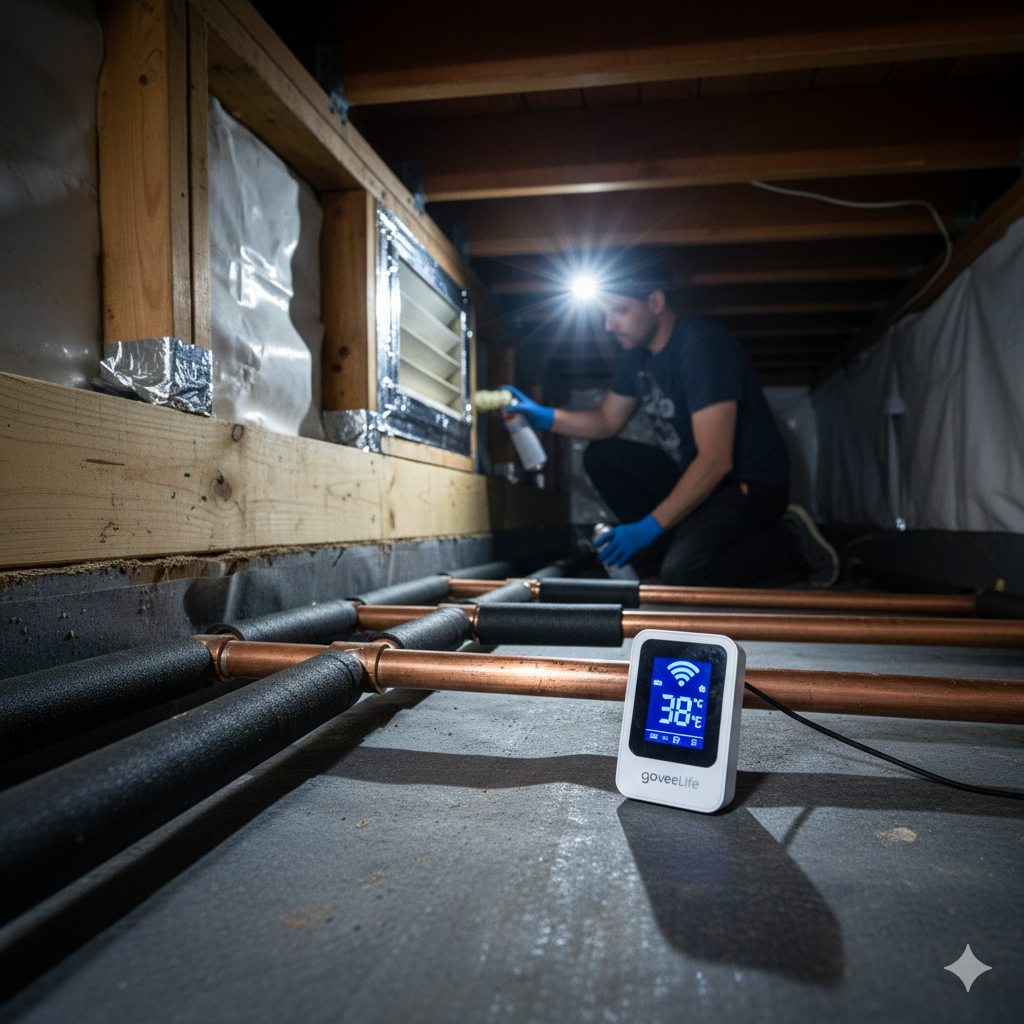
The most effective way to address how to stop pipes from freezing in crawl space is to stop the cold air from getting inside in the first place. Think of your crawl space as a basement that just hasn’t been finished yet. If you wouldn’t leave your basement windows open in January, you shouldn’t leave your crawl space vents open either.
Closing Foundation Vents
While vents are necessary for humidity control in July, they are your enemy in January. Purchase vent covers or use foam board to seal off these openings during the winter months. According to the American Red Cross, closing foundation vents is one of the fastest and cheapest ways to raise the ambient temperature of the space by several degrees.
Sealing the Rim Joist
The rim joist is the area where your home’s wooden frame meets the concrete foundation. This is a notorious spot for air leaks. Use a high-quality “spray foam” or “caulk” to seal every gap, especially around where pipes and electrical wires exit the crawl space. When you are researching how to stop pipes from freezing in crawl space, don’t overlook these tiny cracks; a one-inch gap can let in enough cold air to freeze a nearby pipe in hours.
Step 2: High-Performance Pipe Insulation Techniques
Once you have stopped the drafts, it is time to wrap the pipes themselves. Insulation does not “create” heat, but it slows the transfer of heat from the water to the cold air. If you want to master how to stop pipes from freezing in crawl space, you need to use the right materials for the job.
Foam Pipe Sleeves
The most common DIY solution is the foam pipe sleeve. These are inexpensive, pre-slit tubes that slip over your copper or PEX lines. For maximum protection, look for sleeves with a wall thickness of at least 3/8 inch. Ensure that you cover the elbows and “T-joints” completely, as these are the areas where the pipe wall is often thinnest and most likely to fail.
Fiberglass Wrap
For odd-shaped valves or larger pipes, fiberglass wrap is often more effective than foam. When using fiberglass, be sure to wear gloves and a mask. Wrap the material loosely around the pipe; if you squeeze it too tight, you remove the air pockets that provide the actual insulation.
Electrical Heat Tape
If you live in an area with extreme sub-zero temperatures, insulation alone may not be enough. In these cases, the best answer for how to stop pipes from freezing in crawl space is “heat tape.” This is a specialized cable that you wrap around the pipe which plugs into a standard outlet. Modern “self-regulating” heat tape has a built-in thermostat that only turns on when the temperature hits 38°F, saving you money on your electric bill while providing active warmth.GoveeLife Water Leak Detector 1S$36.99Govee 4.4 (49) Opens in a new window
Step 3: Active Monitoring and Emergency Pressure Relief
The “set it and forget it” approach is dangerous when it comes to winter plumbing. A true expert in how to stop pipes from freezing in crawl space knows that technology is your best friend. If a pipe is going to freeze, you want to know before it bursts, not after you see water flowing out of your crawl space door.
The Role of Smart Sensors
Installing a smart temperature and moisture sensor is a game-changer. Devices like the Moen Flo or the GoveeLife 1S can be placed directly in the crawl space. They will send a notification to your smartphone if the temperature drops below 35°F. This gives you time to go downstairs, open the crawl space door to let in some house heat, or start a faucet dripping before the ice forms.
Letting the Faucets Drip
During an extreme cold snap (temperatures below 20°F), letting a faucet drip is a time-tested method for how to stop pipes from freezing in crawl space. You only need a slow, steady drip from the faucet located farthest from your water main. This accomplishes two things: it keeps water moving, which is harder to freeze, and more importantly, it relieves the pressure buildup if a small ice dam does begin to form inside the pipe.Moen Flo Smart Water Monitor & Shutoff$649.99Moen 4.2 (861) Opens in a new window
Step 4: Long-Term Solutions and Professional Encapsulation
If you find yourself constantly worrying about how to stop pipes from freezing in crawl space every winter, it might be time for a more permanent solution. Temporary foam and dripping faucets are great “band-aids,” but they don’t solve the underlying problem of a cold crawl space.
Full Crawl Space Encapsulation
This is the “Gold Standard” for home protection. A professional contractor will line the entire floor and walls of your crawl space with a thick, 20-mil vapor barrier and seal all vents permanently. They may also install a dehumidifier to keep the air dry. This brings the crawl space into the “conditioned envelope” of your home. Not only does this effectively solve the mystery of how to stop pipes from freezing in crawl space, but it also makes your floors warmer and lowers your heating bills by up to 15%.
Adding a Heat Source
In some cases, homeowners will install a small, thermostatically controlled heater in the crawl space. This heater only activates when the temperature reaches the “danger zone.” While this adds to your utility costs, it is significantly cheaper than a $5,000 plumbing repair and the subsequent mold remediation that follows a major burst.
FAQ: Essential Questions on Crawl Space Protection
1. At what temperature should I start worrying about my pipes? Generally, pipes are at risk once the outside temperature drops below 20°F (-6°C) for several hours. However, if your crawl space has significant drafts, pipes can freeze even when it is 30°F outside.
2. Is PEX pipe better than copper for freezing? Yes, PEX is more flexible than copper and can often expand slightly without bursting. However, PEX is not “freeze-proof.” The fittings (couplers and elbows) are still made of rigid plastic or metal and are common points of failure.
3. Should I leave the crawl space light on? A standard incandescent light bulb produces a small amount of heat. While it won’t heat the whole space, placing a 60-watt bulb near a particularly vulnerable “elbow” in the pipe can sometimes provide just enough warmth to prevent a localized freeze.
4. Can I use a blowtorch to thaw a frozen pipe? Never. Using an open flame is a major fire hazard and can also cause the water inside the pipe to boil and explode. Always use a hair dryer or a heating pad to gently thaw a pipe.
5. Does homeowners insurance cover burst pipes? Most policies cover the damage caused by a burst pipe (like ruined drywall or flooring), but they may deny the claim if they find that the homeowner was negligent in maintaining heat or failed to take basic steps on how to stop pipes from freezing in crawl space.
Conclusion: Securing Your Home Against the Winter Chill
Mastering how to stop pipes from freezing in crawl space is a multi-layered process that begins with sealing out the cold and ends with active monitoring. By taking a Saturday to seal your vents, wrap your pipes in foam sleeves, and install a smart sensor like the GoveeLife 1S, you can sleep soundly during the next blizzard.
Remember, the goal is to be proactive. Waiting until the water stops flowing to look up how to stop pipes from freezing in crawl space is a recipe for disaster. Take action today, invest in high-quality insulation, and consider a whole-home shut-off system like the Moen Flo to ensure that even if a pipe does fail, the damage is minimized. Stay warm, stay dry, and keep your home’s foundation “sturdy” all winter long.
choosing between a moisture sensor and a flood alarm
About The Author
