
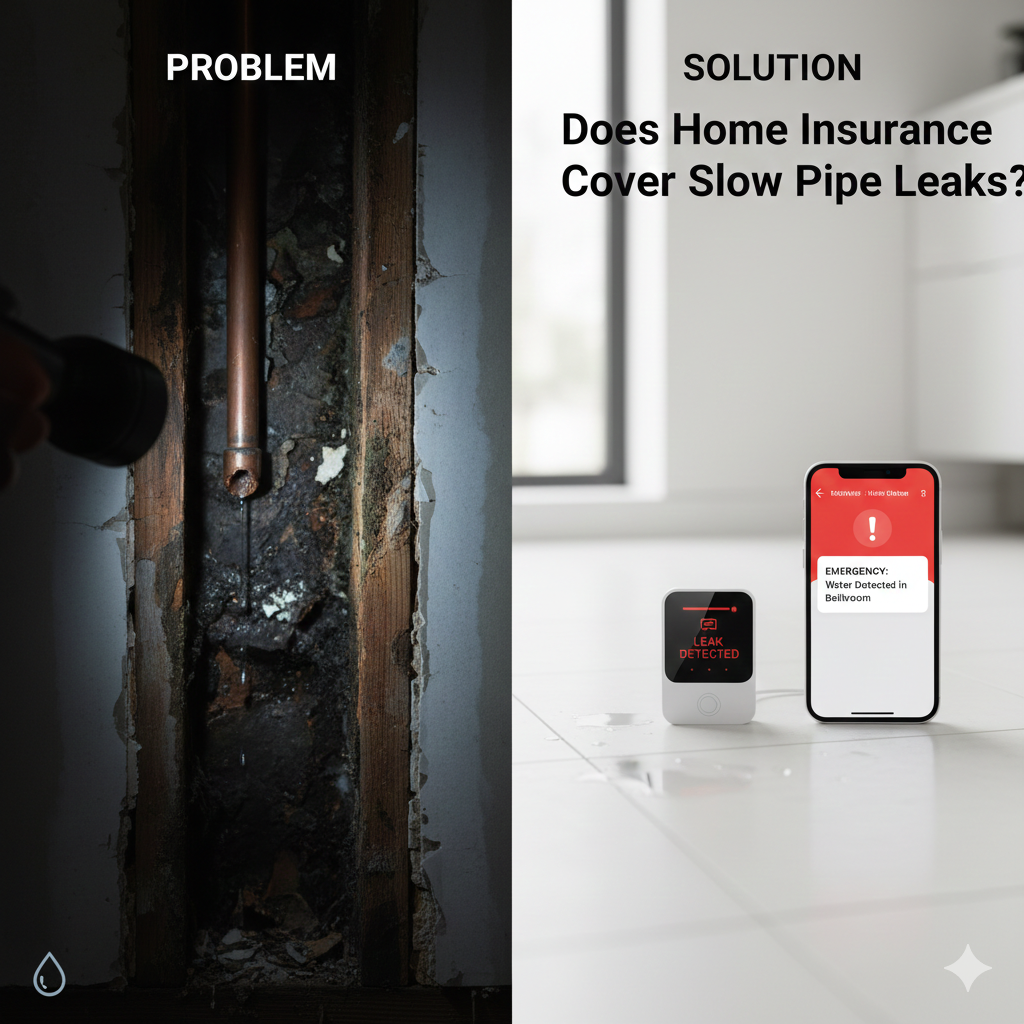
Does home insurance cover slow pipe leaks is a question that often arises only after a homeowner discovers a rotted wall or a moldy subfloor. While sudden pipe bursts are almost always covered, does home insurance cover slow pipe leaks that have been dripping for months? This guide reveals the strict rules insurers use and how you can protect your claim.
When you discover a damp patch on your ceiling, your first instinct is to call a plumber, and your second is to call your agent to ask does home insurance cover slow pipe leaks. Unfortunately, many homeowners are shocked to find that the answer is frequently “no” because insurance is designed to cover sudden and accidental damage, not long-term maintenance issues. If you want to know does home insurance cover slow pipe leaks in your specific situation, you must understand the “hidden” vs. “negligent” distinction that adjusters use to settle claims.
A slow leak can be more devastating than a flood because it works in silence, weakening the structural integrity of your home over weeks or months. When evaluating does home insurance cover slow pipe leaks, the insurance company will look for evidence of how long the problem existed. If the leak was inside a wall where you couldn’t see it, you might have a chance at a successful claim. However, if the leak was under a sink you use every day, the “sudden” requirement is rarely met. By mastering the details of does home insurance cover slow pipe leaks, you can better prepare your home—and your policy—for the unexpected.
The “Sudden and Accidental” Rule: The Deciding Factor
To answer the core question—does home insurance cover slow pipe leaks—you have to look at the “Perils” section of your policy. Most standard homeowners policies (HO-3) cover water damage only if it is sudden. A pipe that freezes and bursts at 3:00 AM is a sudden event. A pinhole leak in a copper line that slowly saturates insulation over six months is considered “gradual.” This gradual nature is the primary reason why the answer to does home insurance cover slow pipe leaks is often a frustrating denial.
Insurance adjusters are trained to look for “telltale” signs of age, such as rust, corrosion, or extensive rot. If they find these, they will likely classify the incident as a maintenance issue rather than a covered peril. When you are researching does home insurance cover slow pipe leaks, you are essentially looking for ways to prove that the damage was “hidden from view” and that no reasonable homeowner could have known about it until the damage manifested on the surface.
The Hidden Leak Exception
Some high-end policies or specific endorsements do provide coverage for “hidden seepage.” If you are worried about does home insurance cover slow pipe leaks, check if your policy has a “Hidden Water Damage” rider. This specific addition can turn a “no” into a “yes,” covering leaks that occur behind walls, under floors, or above ceilings where they are not visible to the naked eye.
The Danger of Negligence: Why Maintenance Matters
A major hurdle in answering does home insurance cover slow pipe leaks is the concept of homeowner negligence. Your policy is a contract that requires you to maintain your home in good repair. If a bathroom sink has been dripping for a year and the vanity eventually rots out, the insurer will argue that you failed to mitigate the damage. This is a common pitfall when homeowners ask does home insurance cover slow pipe leaks after ignoring a “small” problem for too long.
The Role of Mold Coverage
Oftentimes, the biggest expense of a slow leak isn’t the plumbing repair—it’s the mold remediation. Many people ask does home insurance cover slow pipe leaks because they’ve found a colony of mold behind a cabinet. Be aware that even if the water damage is covered, many policies have a very low cap (often $1,000 to $5,000) for mold removal. If a slow leak has been active for a long time, the cleanup costs can easily exceed these limits.
Preventing Denied Claims with Smart Technology
Since the answer to does home insurance cover slow pipe leaks is so often negative, the best strategy is to ensure a leak never becomes “slow” or “hidden” in the first place. This is where smart home technology becomes your best insurance policy. By installing sensors, you turn a gradual, invisible problem into a sudden, alerted event that you can fix immediately.
Smart Water Monitors
Devices like the Moen Flo Smart Water Monitor are revolutionary for those concerned about does home insurance cover slow pipe leaks. This device performs a “Health Test” every night by shutting off the water and checking for pressure drops. It can detect a leak as small as a single drop per minute. Having this data can also help your insurance claim; it provides a digital timestamp of exactly when the leak started, proving it was a recent and “sudden” failure.
Point-of-Use Sensors
For targeted areas like under the kitchen sink or behind the refrigerator, a GoveeLife Water Leak Detector 1S is essential. These small sensors will sound a loud alarm and send a push notification to your phone the second moisture is detected. When you can tell an adjuster, “The alarm went off today and I shut the water off immediately,” you have a much stronger case than if you discover a puddle after returning from a two-week vacation.GoveeLife Water Leak Detector 1S$36.99Govee 4.4 (49) Opens in a new window
Step-by-Step: What to Do When You Find a Leak
If you find a leak and are wondering does home insurance cover slow pipe leaks, your actions in the first hour are critical. Following a specific protocol can mean the difference between a paid claim and a denied one.
- Stop the Flow: Shut off the main water valve immediately. This fulfills your “duty to mitigate” under your insurance contract.
- Document Everything: Take high-resolution photos and videos of the leak site before the plumber arrives.
- Save the Evidence: Tell the plumber to save the broken pipe or the failed valve. The insurance company will want to inspect the failed part to see if the cause was a defect or simple old age.
- Call a Professional Dry-Out Team: Water continues to damage your home even after the leak stops. Professional dehumidification is often covered if the initial leak is covered.
According to the Insurance Information Institute, water damage and freezing are the second most common home insurance claims. Understanding the nuances of does home insurance cover slow pipe leaks is vital because it helps you categorize your incident correctly when speaking with the claims adjuster.
FAQ: Common Concerns Regarding Gradual Leaks
1. If my toilet leaks and ruins the floor, is it covered? If the tank cracked suddenly, yes. If the wax ring has been slowly failing for three years and the floor is now soft, probably not. This highlights why people ask does home insurance cover slow pipe leaks—the “time” element is everything.
2. Does insurance pay for the actual pipe that leaked? Usually, no. Insurance covers the ensuing damage (the ruined drywall, flooring, etc.), but not the $10 pipe fitting or the plumber’s hourly rate to solder a new joint.
3. What if the leak is from a roof and not a pipe? Similar rules apply. If a tree branch falls and creates a hole (sudden), it’s covered. If your shingles are 30 years old and simply wore out (gradual), it’s considered a maintenance issue.
4. Will my rates go up if I file a water claim? Often, yes. Water claims are seen as high-risk by insurers. This is why many homeowners choose to pay for minor leaks out of pocket rather than asking does home insurance cover slow pipe leaks.
5. Can I get a discount for having a smart water shut-off valve? Yes! Many major carriers like State Farm and Progressive offer discounts of 5% to 10% on your premium if you have a monitored system like the Moen Flo.
6. What is “Service Line Coverage”? This is an optional add-on that covers the pipes running from the street to your house. Standard policies usually exclude these, so it’s a great addition if you have older trees with roots that might crush your lines.
Conclusion: Bridging the Gap Between Maintenance and Coverage
Navigating the question of does home insurance cover slow pipe leaks requires a balance of vigilance and the right policy language. While you cannot always rely on your insurer to pay for long-term neglect, you can protect yourself by choosing a policy with hidden water damage coverage and by using technology to catch leaks before they become “gradual” disasters.
By installing a GoveeLife 1S in high-risk zones and staying on top of your home’s “pulses,” you can ensure your home stays leak sturdy. Remember, the best claim is the one you never have to file. Now that you understand the factors involved in does home insurance cover slow pipe leaks, you can take the necessary steps to secure your foundation and your finances.
To prove to an adjuster that a leak was sudden, you need immediate alerts. Understanding the difference between moisture sensor and flood alarm technology can help you catch a drip before it becomes a ‘gradual’ denial
About The Author
