
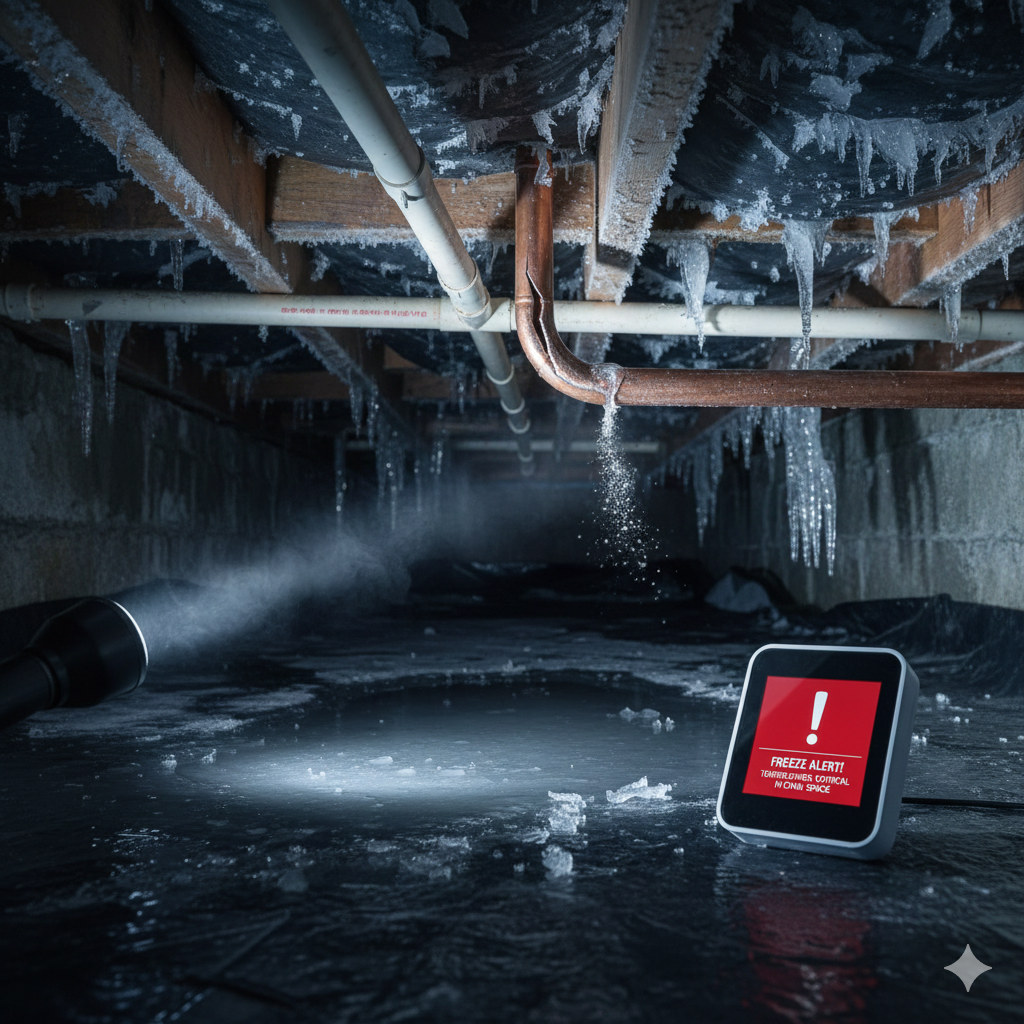
If your water stops during a cold snap, don’t panic. Learn exactly what to do if pipes freeze in crawl space areas to prevent a burst and save thousands in repairs.
It is the sound every homeowner dreads during a winter storm: a faucet that refuses to turn, or worse, a strange gurgling noise coming from the floorboards. When the temperature drops below freezing for an extended period, the unheated void beneath your home becomes a danger zone for plumbing. If you find yourself staring at a dry tap, you are likely wondering what to do if pipes freeze in crawl space locations before the situation turns into a flooded catastrophe. Because crawl spaces are often vented and poorly insulated, they allow sub-zero air to circulate directly around your water lines, turning liquid water into expanding ice in a matter of hours.
The pressure inside a frozen pipe can reach over 40,000 psi, which is more than enough to split copper, PVC, or even PEX. Knowing what to do if pipes freeze in crawl space environments is about more than just finding a heat source; it’s about a controlled, safe sequence of events that protects your home’s structural integrity. If you act too quickly or use the wrong tools, you could inadvertently cause the very burst you are trying to avoid. This comprehensive guide will walk you through the professional-grade steps to identify, thaw, and reinforce your plumbing so you never have to ask what to do if pipes freeze in crawl space again.
Step 1: Immediate Containment and Damage Assessment
The very first thing you must understand when considering what to do if pipes freeze in crawl space is that the ice itself might be acting as a temporary plug for a pipe that has already split. If you thaw the pipe without a plan, you could unleash a torrent of water into your foundation. Before you even touch a hair dryer, locate your main water shut-off valve. This is usually found in the basement, the garage, or near the water meter. Turn it off immediately. By killing the pressure, you ensure that if a crack exists, the damage is limited to the water already in the line.
Once the water is off, your next move in the what to do if pipes freeze in crawl space protocol is to open the faucets connected to the frozen lines. This includes both the hot and cold taps. This relieves the “upstream” pressure that builds up between the ice blockage and the faucet. Leave these taps open throughout the entire process. If you see frost on the outside of a pipe or notice a bulging section of copper, do not attempt to thaw it yourself. These are signs of structural failure, and you should call a vetted local plumber immediately to handle the repair before the ice melts.
Step 2: Safe Thawing Techniques for Tight Spaces
Crawl spaces are notoriously cramped and filled with flammable materials like floor joists, insulation, and vapor barriers. When you are deciding what to do if pipes freeze in crawl space areas, safety is your absolute priority. Never use an open flame. A propane torch or blowtorch is a leading cause of house fires during winter freezes. Instead, use a heavy-duty electric hair dryer or a portable space heater. If using a space heater, never leave it unattended and ensure it is positioned at least three feet away from any combustible material.
The secret to what to do if pipes freeze in crawl space effectively is to start at the faucet and work your way back toward the frozen blockage. This allows the melting water to flow out of the open tap rather than getting trapped behind the ice and creating a secondary pressure burst. If the frozen section is long, you can wrap the pipe in towels soaked in hot water. Replace these “hot wraps” every 5-10 minutes. This method is slower but much safer for plastic pipes like PEX, which can be damaged by the concentrated heat of a hair dryer or heat gun.
Step 3: Leveraging Technology for Prevention
If you find yourself repeatedly asking what to do if pipes freeze in crawl space every winter, it is time to stop playing defense and start using smart home technology. A “ghost” leak or a slow freeze can be caught hours before it becomes a crisis if you have the right sensors in place. For instance, a Kidde Water Leak + Freeze Detector can be placed directly on the floor of the crawl space. It will send a push notification to your phone the moment temperatures drop near the freezing mark, giving you time to turn on a heater or drip your faucets.
For a more permanent solution, consider a Moen Flo Smart Water Monitor. This device monitors the minute-by-minute pressure of your entire home. If a pipe in the crawl space begins to freeze and expand, the Moen Flo will detect the unusual pressure spike and can even shut off your water automatically. When you have these tools, the question of what to do if pipes freeze in crawl space changes from an emergency response to a simple notification on your smartphone.GoveeLife Water Leak Detector 1S$36.99Govee 4.4 (49) Opens in a new window
Step 4: Long-Term Winterization and Reinforcement
Once the ice is gone and your water is flowing again, the final stage of what to do if pipes freeze in crawl space is making sure it never happens again. Start by sealing the “envelope” of your crawl space. Check your foundation for cracks and ensure your crawl space vents are closed and sealed with foam board during the winter months. A single draft of sub-zero air hitting a pipe is often the root cause of a localized freeze.
Next, invest in high-quality insulation. Foam pipe sleeves are a great start, but for maximum protection, use self-regulating heat tape. This specialized cable is taped along the length of the pipe and plugged into a GFCI outlet. It features an internal thermostat that only draws power when the pipe temperature drops, providing a constant shield of warmth. According to the Red Cross, properly insulating your pipes and sealing drafts are the most effective ways to avoid the stress of what to do if pipes freeze in crawl space during a record-breaking cold snap.
FAQ: Essential Frozen Pipe Knowledge
1. How long does it take for a pipe to freeze in a crawl space? It typically takes about 6 hours of temperatures below 20°F for an uninsulated pipe in a crawl space to freeze. However, if there is a draft hitting the pipe directly, it can freeze much faster.
2. Should I keep the heat on in the crawl space? If your crawl space is encapsulated, your home’s HVAC system may already keep it warm. If it is vented, you should not use a standard space heater long-term. Instead, use heat tape or improve the insulation.
3. Will frozen pipes always burst? No, but the risk is very high. Pipes often burst not where the ice is, but between the ice blockage and the closed faucet where water pressure becomes trapped and extreme. This is why knowing what to do if pipes freeze in crawl space—specifically opening faucets—is so critical.
4. Can I use a heat gun to thaw pipes? You can, but be extremely careful. Heat guns can reach temperatures that melt PVC and PEX or even ignite dry wood. A hair dryer is generally the safer DIY option.
5. Why did my pipes freeze if I left the faucet dripping? A drip only works if it keeps water moving through the entire length of the cold pipe. If the freeze happened in a “dead leg” or a section of pipe far from the dripping faucet, the water in that section remained stagnant and froze.
6. Does home insurance cover frozen pipes? Most standard policies cover the damage from a burst pipe, but only if you can prove you took “reasonable care” to maintain heat in the home. Check our detailed guide on does home insurance cover slow pipe leaks for more on coverage nuances.
7. How can I find the frozen spot if the pipes are behind insulation? Look for the section of insulation that has frost on the outside or feels significantly colder. You can also use an infrared thermometer to scan the lines and find the exact “cold spot” where the ice has formed.
Conclusion: Turning a Crisis into a Plan
Dealing with frozen plumbing is a rite of passage for many homeowners, but it doesn’t have to end in a flood. By following the professional steps of what to do if pipes freeze in crawl space, you can safely restore your water flow and protect your foundation from rot and mold. Remember to always shut off the main water first, use gentle heat sources like hair dryers, and never ignore a bulging pipe.
.while a wet cabinet is a localized problem, a silent leak elsewhere can be even more costly; for instance, consider how much water a leaking toilet wastes daily compared to a small sink drip