
Knowing how to monitor basement remotely for water leaks is the ultimate game-changer for homeowners who want to prevent devastating flood damage while they are away from home. A single burst pipe or a failed sump pump can release hundreds of gallons of water in hours, leading to structural rot and toxic mold. By leveraging modern smart home technology, you can transform your vulnerable lower level into a high-tech, self-protecting fortress that alerts your smartphone the second moisture is detected.
Whether you are at work or halfway across the globe, understanding how to monitor basement remotely for water leaks provides an invaluable layer of security. In 2026, water leak detection has evolved from simple floor alarms to comprehensive “predict and prevent” systems that monitor flow rates and can even shut off your main water line automatically. This guide will walk you through the essential steps, from choosing the right sensors to integrating a remote shut-off valve, so you never have to come home to a basement disaster.
Choose Your Guardian: Smart Water Leak Detectors
The first and most critical step in learning how to monitor basement remotely for water leaks is selecting the right hardware. Modern detectors generally fall into two categories: point-of-use sensors and whole-home flow monitors. Point-of-use sensors are small, battery-powered devices placed in high-risk zones, such as near the water heater, behind the washing machine, or at the lowest point of your basement floor. When water touches the sensor’s metal contacts, it triggers an instant alert to your smartphone via Wi-Fi or a dedicated hub.
For those who want a more “bulletproof” setup for how to monitor basement remotely for water leaks, LoRaWAN or Z-Wave sensors are often preferred over standard Wi-Fi. Wi-Fi environments can be crowded and prone to drops, whereas specialized frequencies offer better range and superior battery life—sometimes lasting up to 2-3 years on a single charge. Top-rated models for 2026 include the Kidde Water Leak + Freeze Detector, which works with or without Wi-Fi, and the YoLink Hub system, known for its ultra-long range.
The Ultimate Defense: Automatic Remote Shut-Off Valves
If you truly want to master how to monitor basement remotely for water leaks, a sensor alone isn’t enough; you need the ability to take action. An automatic shut-off valve, such as the Flo by Moen or Phyn Plus, installs directly on your home’s main water line. These sophisticated devices monitor minute changes in water pressure and flow, detecting leaks as small as one drop per minute. If the system identifies a catastrophic failure, it can automatically close the valve, cutting off the water supply to the entire home instantly.
Integrating these valves into your strategy for how to monitor basement remotely for water leaks provides total peace of mind. Through a mobile app, you can remotely close your water valve from anywhere in the world if you receive a leak alert. This “sensor-to-valve” ecosystem—where a basement sensor detects water and triggers a main line shut-off—is the gold standard for home water security in 2026.
Sump Pump Surveillance: Monitoring the Heart of the Basement
For many homes, the sump pump is the only thing standing between a dry basement and a lake. A key component of how to monitor basement remotely for water leaks is ensuring this pump is operational. Smart sump pump monitors, like the Basement Watchdog, can alert you if the pump loses power, if the water level in the basin rises too high, or if the pump is running more frequently than normal.
Setting up an alert for your sump pump is a vital part of knowing how to monitor basement remotely for water leaks during heavy storms. If your pump fails while you are on vacation, a smart sensor provides those critical minutes needed to call a neighbor or a vetted local plumber before the basin overflows. For maximum protection, always ensure your sump pump has a battery backup system in case of a power outage during a major rain event.
Optimize Your Network: Connectivity Matters
A frequent hurdle when figuring out how to monitor basement remotely for water leaks is the signal strength in underground spaces. Thick concrete walls and metal pipes can block standard Wi-Fi signals, leading to missed alerts. To overcome this, many professionals recommend using a system with a dedicated hub that uses sub-GHz frequencies, which penetrate walls much more effectively than 2.4GHz Wi-Fi.
When planning how to monitor basement remotely for water leaks, consider the “hub-and-spoke” model. In this setup, your sensors communicate with a central hub located on the main floor, which then connects to your internet router. This ensures that even if your basement has a “dead zone” for Wi-Fi, your water sensors stay online and ready to report any issues.
Environmental Monitoring: More Than Just Liquid Water
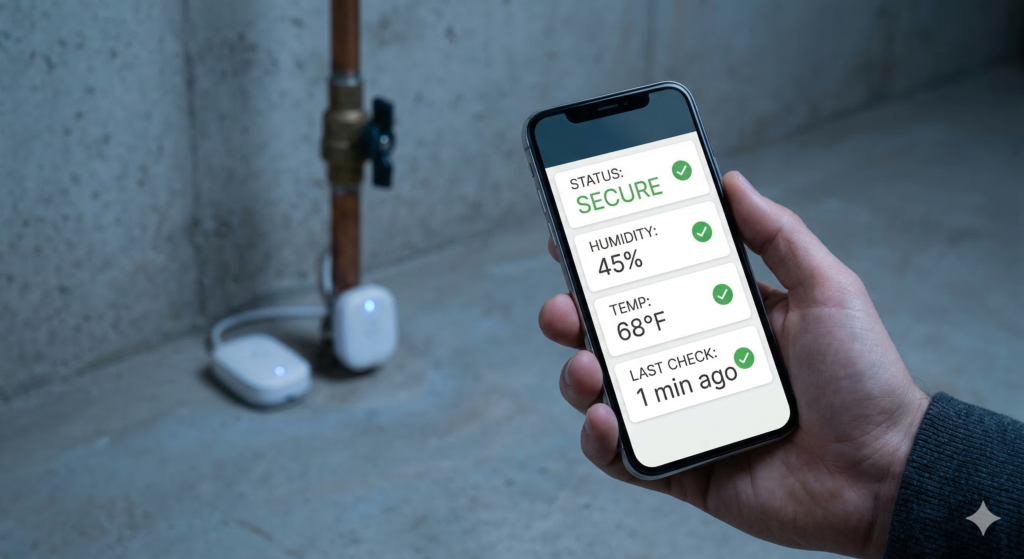
Interestingly, learning how to monitor basement remotely for water leaks also involves tracking humidity and temperature. High humidity in a basement can lead to pipe condensation, which mimics a leak and promotes mold growth. Many smart leak detectors, like those from Phyn or Eve, also report ambient temperature and relative humidity levels.
By setting custom thresholds as part of your plan for how to monitor basement remotely for water leaks, you can receive an alert if your basement becomes too humid or if the temperature drops low enough to risk a pipe freeze. This environmental data allows you to manage your aging plumbing infrastructure proactively, addressing issues before a pipe actually bursts.
Pre-Travel Checklists: Integrating Remote Tech with Manual Safety
Even the best technology for how to monitor basement remotely for water leaks works best when combined with physical maintenance. Before leaving for an extended trip, conduct a thorough inspection of your basement. Check for visible cracks in the foundation, clear any debris from your gutters to ensure proper drainage, and test your sump pump by pouring a bucket of water into the basin.
While the goal is to rely on how to monitor basement remotely for water leaks, shutting off the main water valve manually before a long vacation is still one of the most effective ways to prevent a flood. If you must leave the water on for a lawn sprinkler system or a person checking the house, ensure your smart shut-off valve is set to “Away Mode” so it becomes extra sensitive to any unusual flow.
FAQ: Remote Water Leak Monitoring Essentials
1. Can I monitor for leaks if my Wi-Fi goes out? Yes, some systems like Kidde or YoLink use local alarms or specialized frequencies that don’t rely solely on your home’s Wi-Fi to function. However, to receive a remote alert on your phone, you will generally need some form of internet connectivity (Wi-Fi or cellular) at the hub level.
2. Where are the best places to put sensors in a basement? Focus on high-risk areas: directly under the water heater, behind the washing machine, near the sump pump, and at the lowest point of the floor where water naturally pools.
3. Do smart water leak detectors lower insurance premiums? Many major insurers offer discounts for homes with professional-grade leak detection and automatic shut-off valves. Check with your provider to see if you qualify for a “smart home” credit.
4. What is the difference between a moisture sensor and a flow monitor? A moisture sensor (point-of-use) detects water on the floor, while a flow monitor (point-of-entry) sits on your main water line and detects leaks inside your pipes by tracking pressure and water usage.
5. How often do I need to change the batteries in remote sensors? Most modern sensors last between 2 and 3 years. Most apps will send you a “low battery” notification well before the device dies, so you have plenty of time to replace them.
6. Is professional installation required for remote shut-off valves? While some whole-home monitors like Flume 2 are DIY-friendly because they strap onto your existing meter, automatic shut-off valves like Flo by Moen usually require a professional plumber to cut into your main water line.
7. Can a leak sensor detect a pipe burst behind a wall? Standard floor sensors cannot detect leaks inside walls until the water reaches the floor. To catch “hidden” leaks behind walls or under slabs, you need a flow-based monitor that tracks pressure drops.
Conclusion: Protect Your Investment from Afar
Mastering how to monitor basement remotely for water leaks is an essential skill for the modern homeowner. By combining strategic point-of-use sensors with an intelligent whole-home shut-off valve, you create a multi-layered shield that protects your property from one of the most common and costly types of home damage. In 2026, there is no reason to risk a flooded basement when affordable, reliable technology can stand guard 24/7.
Take the time to assess your basement’s vulnerabilities today. Whether it’s an aging water heater or a sump pump that hasn’t been tested in years, the right sensors will give you the early warning you need to act. Now that you know how to monitor basement remotely for water leaks, you can travel with confidence, knowing your home is safe, dry, and secure.
Does home insurance cover slow pipe leaks
About The Author
