
Finding a massive spike in your utility bill can be a heart-stopping moment for any homeowner, often leading to the urgent question of how to check for underground water leak in yard areas before your foundation is compromised. While a leak inside the home is usually easy to spot due to puddles or water stains, an exterior line failure can remain hidden beneath your lawn for months, slowly eroding the soil and wasting thousands of gallons of water. Understanding how to check for underground water leak in yard spaces is a critical skill that every property owner should master to prevent catastrophic sinkholes and structural damage to their main service lines. In this comprehensive 2026 guide, we will break down the professional-grade techniques you can use to pinpoint a subterranean breach without having to dig up your entire landscape.
The First Warning Signs: Reading Your Landscape for Clues
The secret to mastering how to check for underground water leak in yard soil is to look for anomalies in your lawn’s health that don’t match the current weather patterns. One of the most common indicators is a “super-green” patch of grass that grows significantly faster and taller than the rest of the yard. While it might look like a healthy spot, it is often a sign that a pipe is leaking nutrient-rich water directly into the root system of that specific area. When you are investigating how to check for underground water leak in yard pipes, walk your entire property and look for soft, spongy spots or areas where the ground feels like it is “bouncing” under your weight. These are clear indicators of saturated earth that has lost its structural integrity due to a constant flow of pressurized water.
Another visual red flag involves your hardscaping, such as your driveway, sidewalk, or patio. If you notice new cracks forming or sections of your pavers beginning to sink, it is time to learn how to check for underground water leak in yard zones nearby. Water will always take the path of least resistance, and often that path is underneath your heavy concrete slabs. As the water washes away the supporting sand and dirt, the concrete collapses into the void. This is a high-priority situation that requires immediate attention to avoid a total replacement of your driveway. By the time you see the sinkhole, the leak has likely been active for weeks, making the knowledge of how to check for underground water leak in yard signs even more valuable for early detection.
The Meter Test: Confirming the Breach Without Digging
Before you start digging, the most scientific way how to check for underground water leak in yard lines is to perform a water meter isolation test. Start by turning off every faucet, appliance, and water-consuming device inside your house. Ensure that your ice maker is off and no one flushes a toilet during this process. Once the house is “silent,” go to your water meter box, usually located near the curb in a concrete or plastic housing. If the small “leak indicator” (often a tiny red or silver triangle or star) is spinning even though everything inside is off, you have a leak. To determine how to check for underground water leak in yard locations specifically, you must now turn off the main shut-off valve to the house itself. If the meter is still spinning after the house valve is closed, the leak is officially in your yard between the meter and the house.
This specific test is the gold standard for how to check for underground water leak in yard diagnostics because it removes all guesswork. If the meter stops when the house valve is closed, the leak is inside your walls. But if that little dial keeps turning, you are losing money into the dirt. In 2026, many homes in Fayetteville, North Carolina, are equipped with smart meters that can send alerts to your phone, but these manual checks remain the most reliable way to confirm the exact section of the pipe that has failed. Mastering how to check for underground water leak in yard meter reading can save you from calling a plumber for an “indoor” problem that is actually outdoors, potentially saving you hundreds in diagnostic fees.
Advanced DIY Detection: Probing and Sound Testing
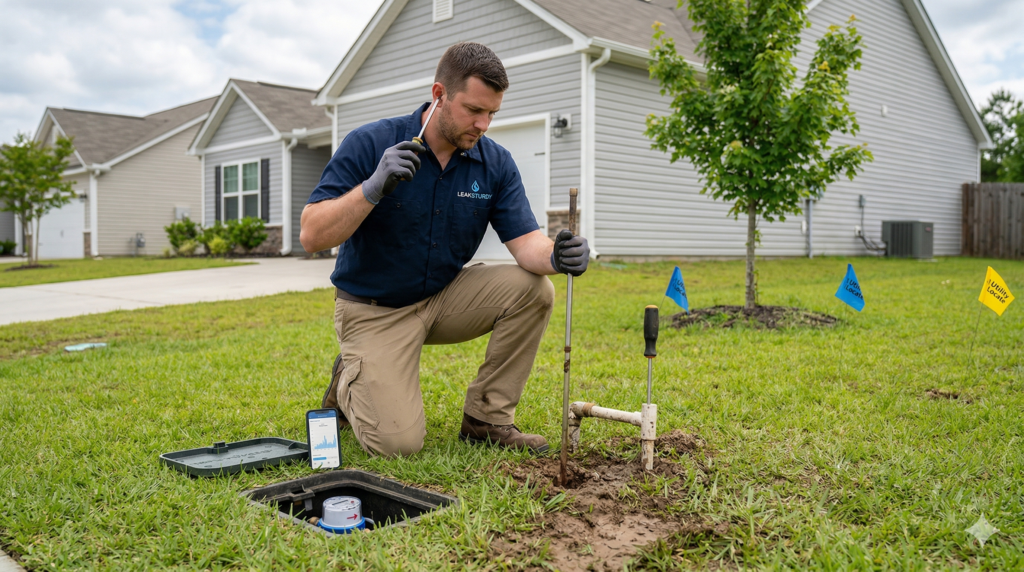
Once you have confirmed that the water is escaping into your soil, the next phase of how to check for underground water leak in yard areas involves physical probing. You can purchase a simple soil probe—a long, thin metal rod with a T-handle—from most home improvement stores. Gently push the probe into the ground every few feet along the path where you suspect the water line runs. If the probe slides into the earth with very little resistance or comes up muddy in one specific spot while the rest of the yard is dry, you have found your “hot zone.” This is a manual but highly effective method for how to check for underground water leak in yard locations that aren’t showing surface puddles yet.
For those who want a more tech-heavy approach, you can use a “ground microphone” or even a simple DIY stethoscope made from a long screwdriver. Place the metal tip of the screwdriver against your outdoor hose bib or the pipe coming out of the ground and put your ear to the handle. If you hear a constant hissing or rushing sound, it is the vibration of water escaping the pipe under pressure. Professional leak detectors use high-frequency acoustic equipment to do this, but the principle is the same. Learning how to check for underground water leak in yard pipes through sound can help you narrow down a leak to within a few feet, which significantly reduces the amount of digging required for the repair.
FAQ: Underground Leak Detection Essentials
1. How much does an underground water leak usually cost to fix? In 2026, a standard spot repair can range from $500 to $1,500, but a full line replacement can exceed $4,000 depending on the depth and length of the pipe. This is why knowing how to check for underground water leak in yard spots early is so important for your budget.
2. Can tree roots cause my yard pipes to leak? Yes, tree roots are one of the leading causes of exterior pipe failure. They are drawn to the moisture and warmth of the pipes and can eventually crush or penetrate older clay or PVC lines.
3. Will my home insurance cover a yard leak? Most standard policies do not cover the repair of the pipe itself, but they may cover the “resultant damage” to your home’s foundation. Check our guide on does home insurance cover slow pipe leaks for a deeper look at policy exclusions.
4. How deep are water lines usually buried? In most regions, lines are buried 12 to 36 inches deep to stay below the frost line. If you are learning how to check for underground water leak in yard depths, you should always call 811 to have other utility lines marked before you dig.
5. What is the most common pipe material that leaks in yards? Older homes often have “Polybutylene” or galvanized steel pipes, both of which are highly prone to failure. Newer homes use PEX or heavy-duty PVC, which are much more resilient.
6. Can I use a moisture meter to find the leak? Yes, a high-quality pinless moisture meter can help, but they are often limited by the thickness of the grass and topsoil. Probing is usually more accurate for deep leaks.
7. Should I turn my water off if I find a leak in the yard? If the leak is large enough to cause visible flooding or sinkholes, yes, turn it off at the meter immediately. For smaller “weeping” leaks, you can usually wait a day or two for a professional repair.
Conclusion: Protecting Your Home from the Bottom Up
Mastering how to check for underground water leak in yard environments is about being proactive rather than reactive. By combining the visual inspection of your lawn’s health, the precision of the water meter isolation test, and the physical evidence gathered through soil probing, you can stop a minor drip before it becomes a major disaster. Remember that water is a silent destroyer; by the time it reaches the surface, the damage beneath the ground is already significant.
If your DIY efforts have helped you locate the general area of the problem, you are already ahead of the game. Now that you know how to check for underground water leak in yard zones, you can provide your plumber with exact data, which speeds up the repair process and lowers your labor costs. For more information on protecting your property from hidden moisture, visit the EPA WaterSense Guide to learn about the national standards for leak prevention. Keeping a “leak sturdy” home starts with the pipes you can’t see, so stay vigilant and keep your yard dry.
A leak in your lawn is often the first warning sign that your entire system is failing; check our guide on the signs of aging plumbing infrastructure in older homes to see if your indoor pipes are also at risk.
About The Author
